






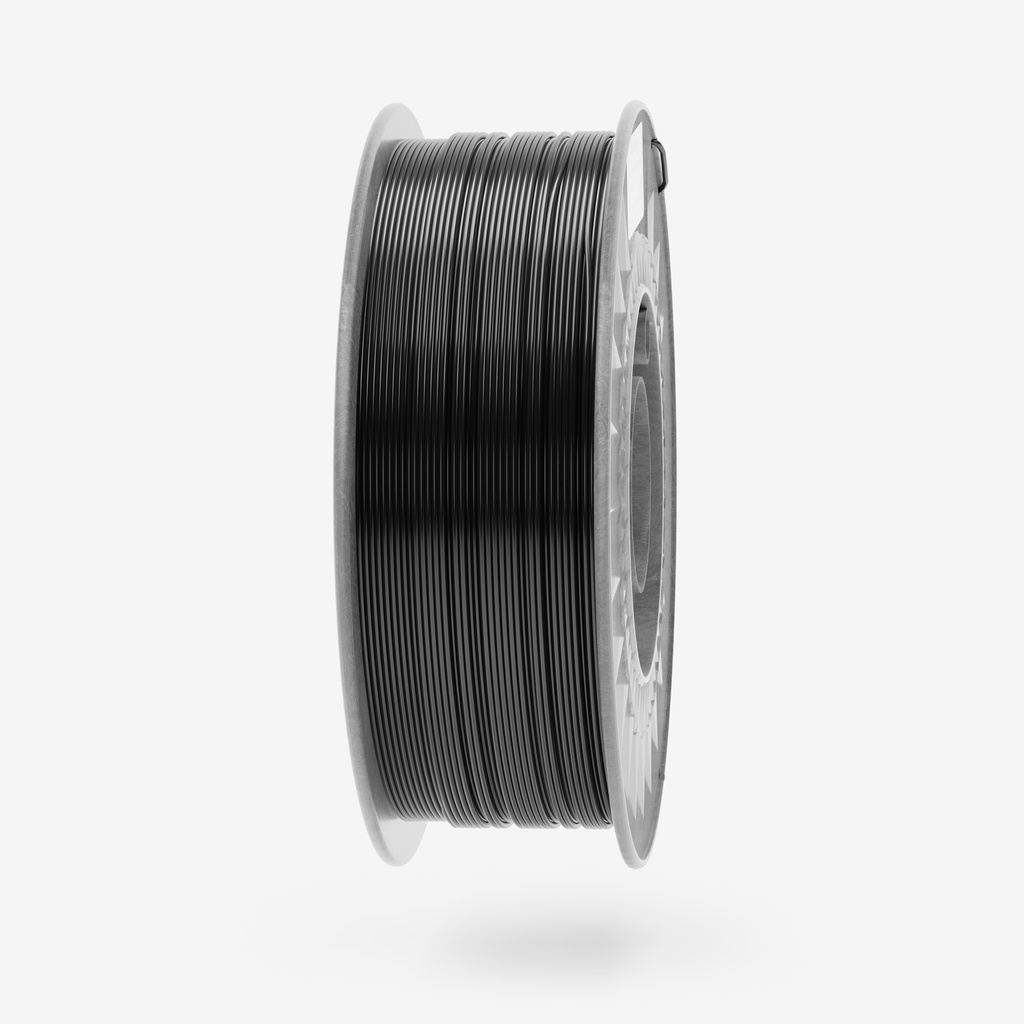
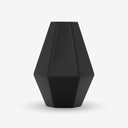
PLA Blaster Jet Black – Deep Contrast Meets High Performance
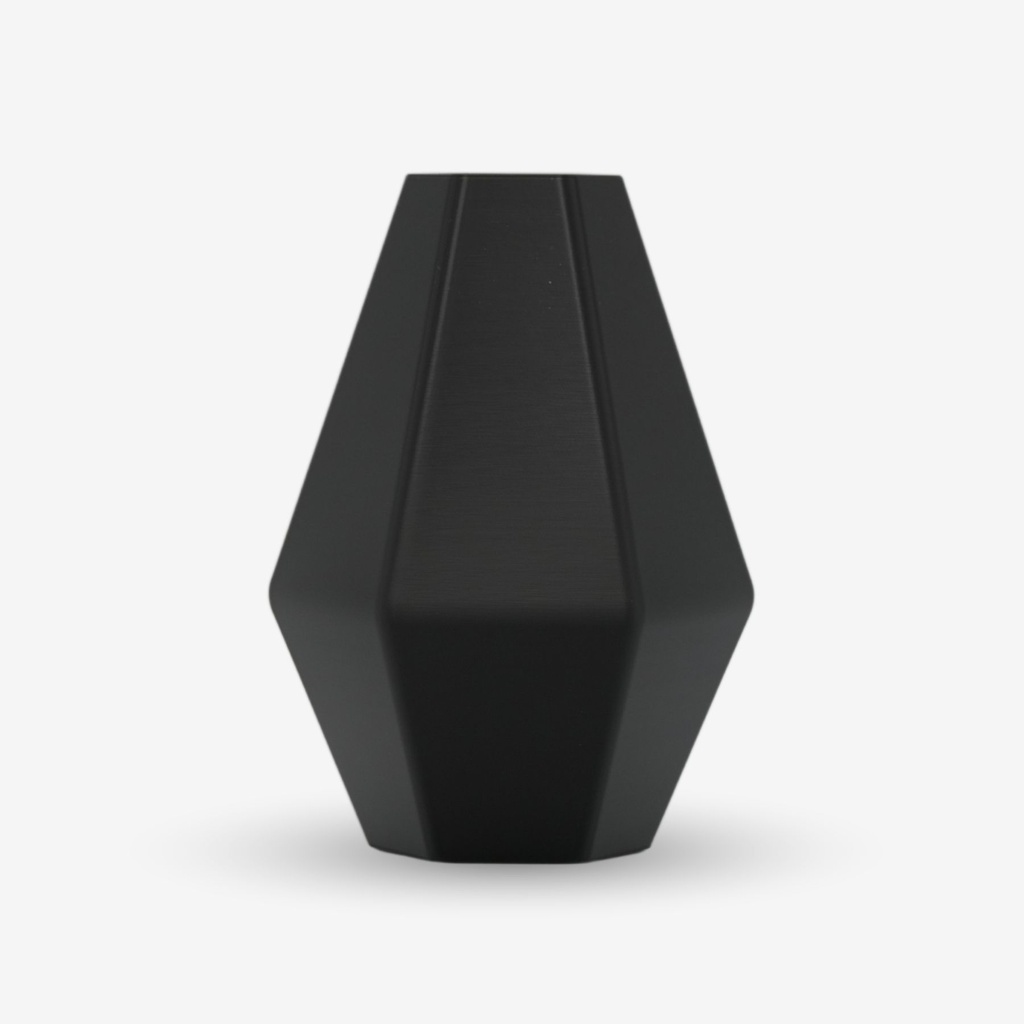
PLA Blaster Jet Black is a high-grade filament engineered for creators who demand maximum contrast, reliable strength, and flawless surface quality. Its rich, matte black finish delivers striking visual depth, making details pop with every layer. Built on an enhanced PLA+ base, Jet Black combines superior toughness with exceptional print reliability, ensuring your parts look sharp and perform under stress.
Key Benefits:
- Enhanced Toughness: PLA+ formulation provides improved impact resistance and durability over standard PLA.
- Consistent Printing: Excellent layer adhesion and minimal warping for clean, dependable results.
- Broad Compatibility: Works seamlessly on all FDM/FFF printers with a 0.4 mm nozzle.
- Eco-Friendly: Made from biodegradable, non-toxic materials—perfect for sustainable projects.
Applications:
- Prototypes & Functional Parts: Ideal for gear housings, brackets, and end-use components requiring both strength and aesthetics.
- Artistic & Decorative Models: Perfect for sculptures, miniatures, and display pieces where contrast enhances form.
- Tooling & Jigs: Provides clear visibility of edges and tolerances in fixtures, templates, and guides.
- Cosplay & Props: Creates bold, dramatic elements for costumes and accessories.
- Everyday Printing: A go-to “default” filament for users who prefer sleek, professional black prints.
| Colour | Jet Black |
| Weight | 1 kg |
| Diameter tolerance | < 0,05 mm |
| Diameter | 1,75 mm |
| Printing Temperature | 230-240°C |
| Bed Temperature | 40-60°C |
| Printing Speed | 40-300 mm/s |
| Density | 1.24 g/cm³ |
| Heat resistance | up to 110°C |
PLA Blaster – Print Settings
PLA Blaster is an improved version of classic PLA, offering higher strength, better durability, and excellent mechanical properties. To achieve optimal printing results, it is important to set the parameters correctly in the slicer software. For example, in OrcaSlicer https://orca-slicer.com/ for the Bambu Lab A1 Mini printer with a 0.4 mm nozzle.

Printing Temperature
Select the Printer Profile
These recommendations are for all BambuLab printers, as the most widely used printer. Professional and extra powerful printers need specific settings, especially max flow. For these cases please do not hesitate to contact us support.
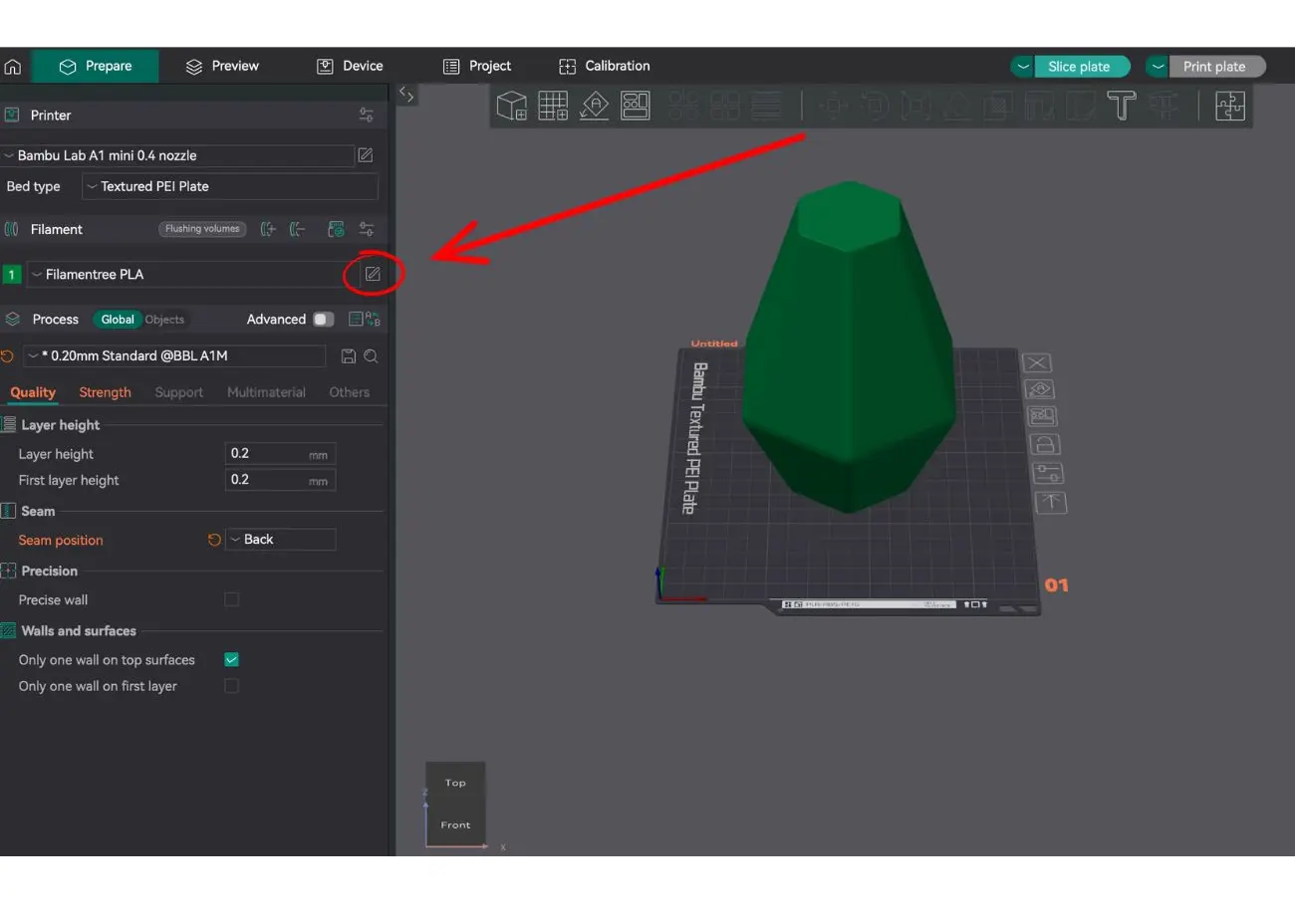
1. Select the Printer Profile
- In the top left corner, select Bambu Lap printer
- In the Bed type field, choose the appropriate bed type, such as Textured PEI Plate.
2. Edit Filament Settings
Click on the pencil icon next to the filament name (in our case, Filamentree PLA) to open the filament settings.
Bed Temperature
For Textured PEI Plate:
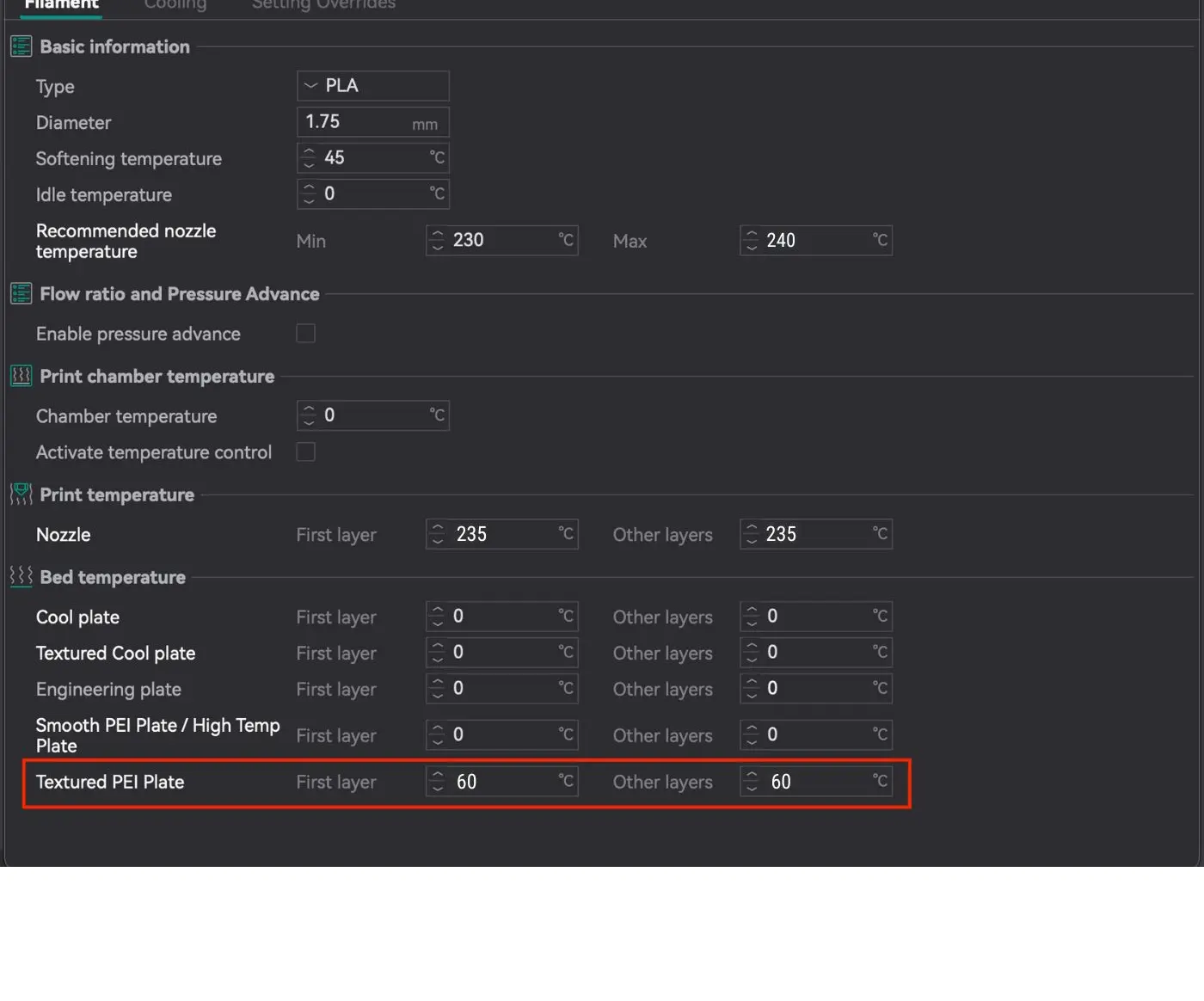
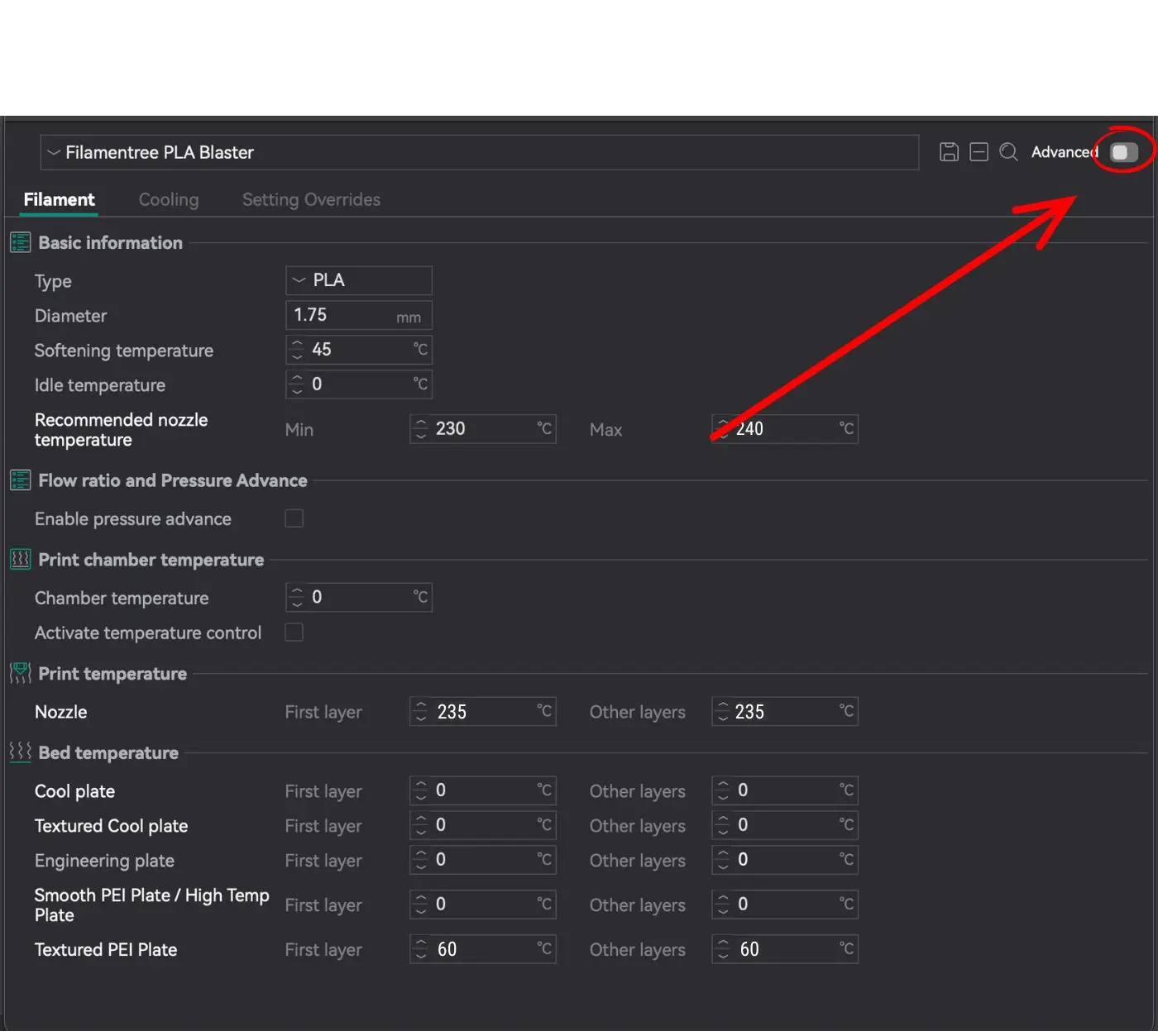
- First layer: 60°C
- Other layers: 60°C
The temperature is specifically set for the Textured PEI Plate as it provides excellent adhesion for PLA Blaster at 60°C. For other types of plates (e.g., Cool Plate, Smooth Plate), the temperature remains at 0°C because they are not used in this configuration.
Edit Settings
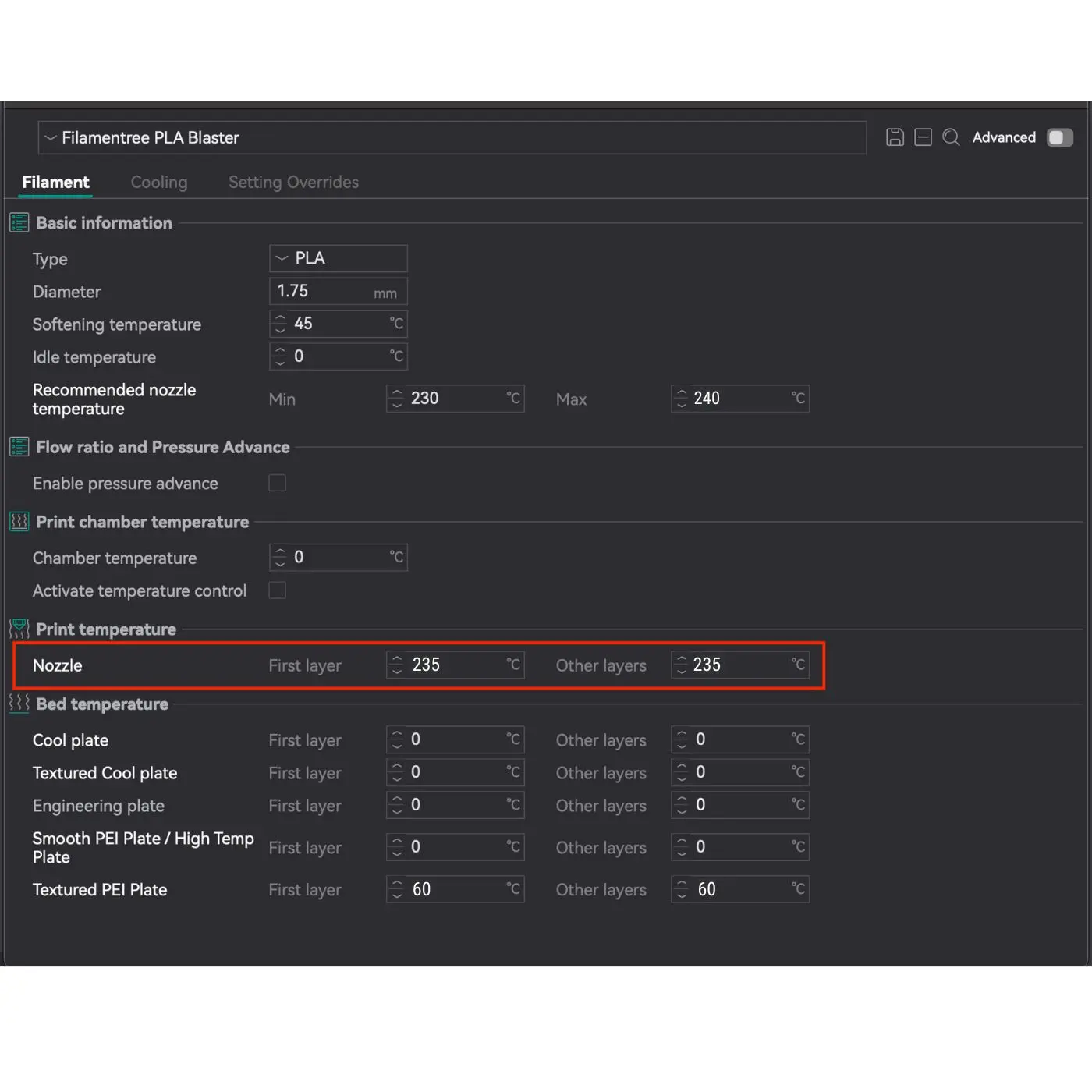
PLA Blaster requires a higher printing temperature than standard PLA, so fine-tuning the temperature settings is key to unlocking its full strength and durability.
📌 Where to set it?
1. Open OrcaSlicer
2. Go to Filament Settings
3. Recommended Nozzle Temperature: 230 – 240 °C
👉 The value 235 °C (as shown in the red box in the image) is the middle between 230 and 240 °C and is a universal recommendation for most prints.
Printing Temperature
Select the Printer Profile
These recommendations are for all BambuLab printers, as the most widely used printer. Professional and extra powerful printers need specific settings, especially max flow. For these cases please do not hesitate to contact us support.
1. Select the Printer Profile
- In the top left corner, select Bambu Lap printer
- In the Bed type field, choose the appropriate bed type, such as Textured PEI Plate.
2. Edit Filament Settings
Click on the pencil icon next to the filament name (in our case, Filamentree PLA) to open the filament settings.
Bed Temperature
For Textured PEI Plate:
- First layer: 60°C
- Other layers: 60°C
The temperature is specifically set for the Textured PEI Plate as it provides excellent adhesion for PLA Blaster at 60°C. For other types of plates (e.g., Cool Plate, Smooth Plate), the temperature remains at 0°C because they are not used in this configuration.
Edit Settings
PLA Blaster requires a higher printing temperature than standard PLA, so fine-tuning the temperature settings is key to unlocking its full strength and durability.
📌 Where to set it?
1. Open OrcaSlicer
2. Go to Filament Settings
3. Recommended Nozzle Temperature: 230 – 240 °C
👉 The value 235 °C (as shown in the red box in the image) is the middle between 230 and 240 °C and is a universal recommendation for most prints.
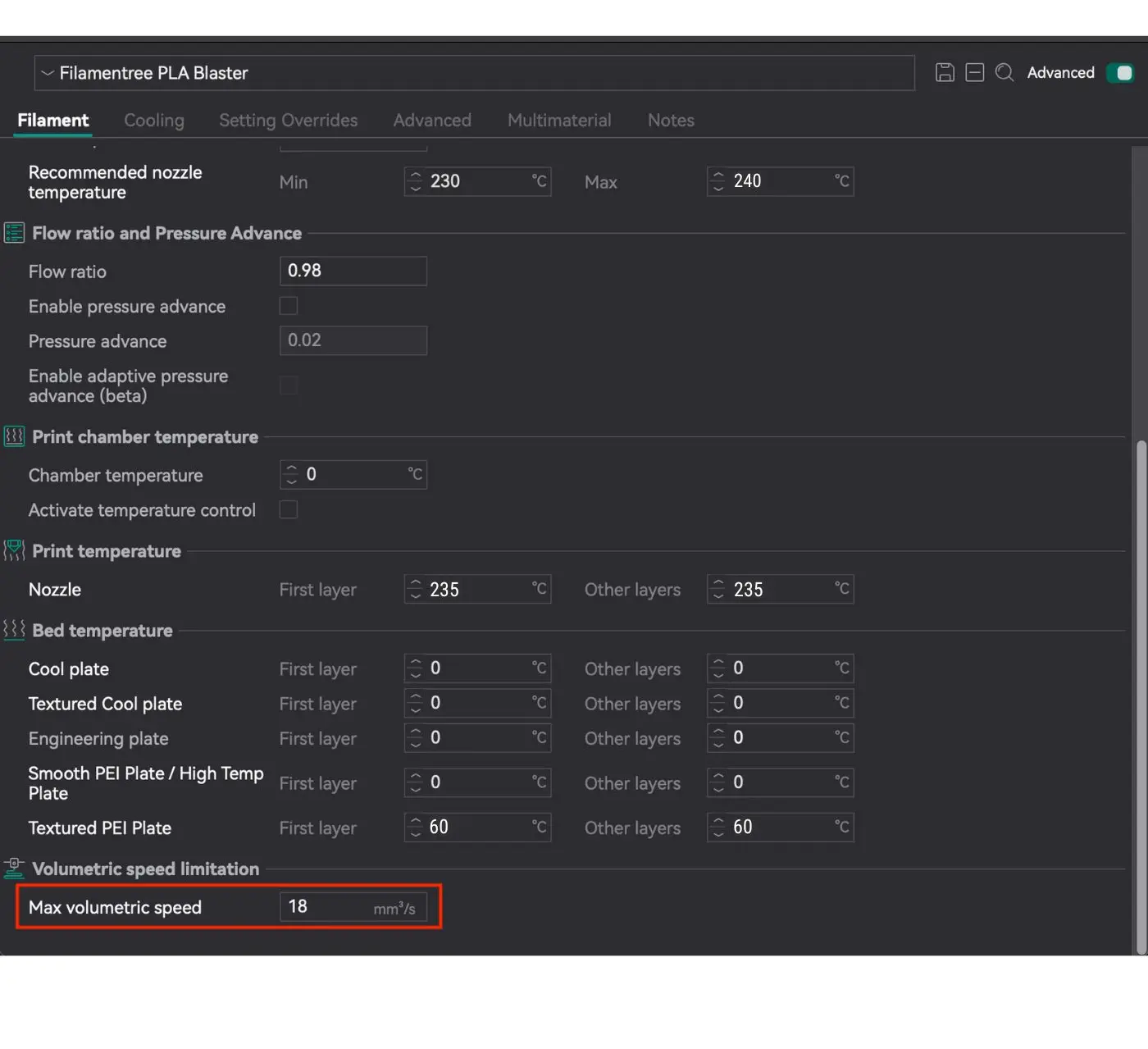
Max Volumetric Speed
In OrcaSlicer settings, Max Volumetric Speed limits the maximum volume of filament that can be extruded through the nozzle per second. This is a critical parameter that affects print quality and helps avoid issues with filament feeding.
What does this parameter mean?
- Max Volumetric Speed (MVS): Limits the rate of filament extrusion in mm³/s.
- If the value is exceeded, the extruder may struggle to feed the filament, which can lead to:
- Under-extrusion (insufficient material is deposited).
- Decreased surface quality and detail precision.
- Missed steps or damage to the extruder’s feed gears.
Cooling for specific layer
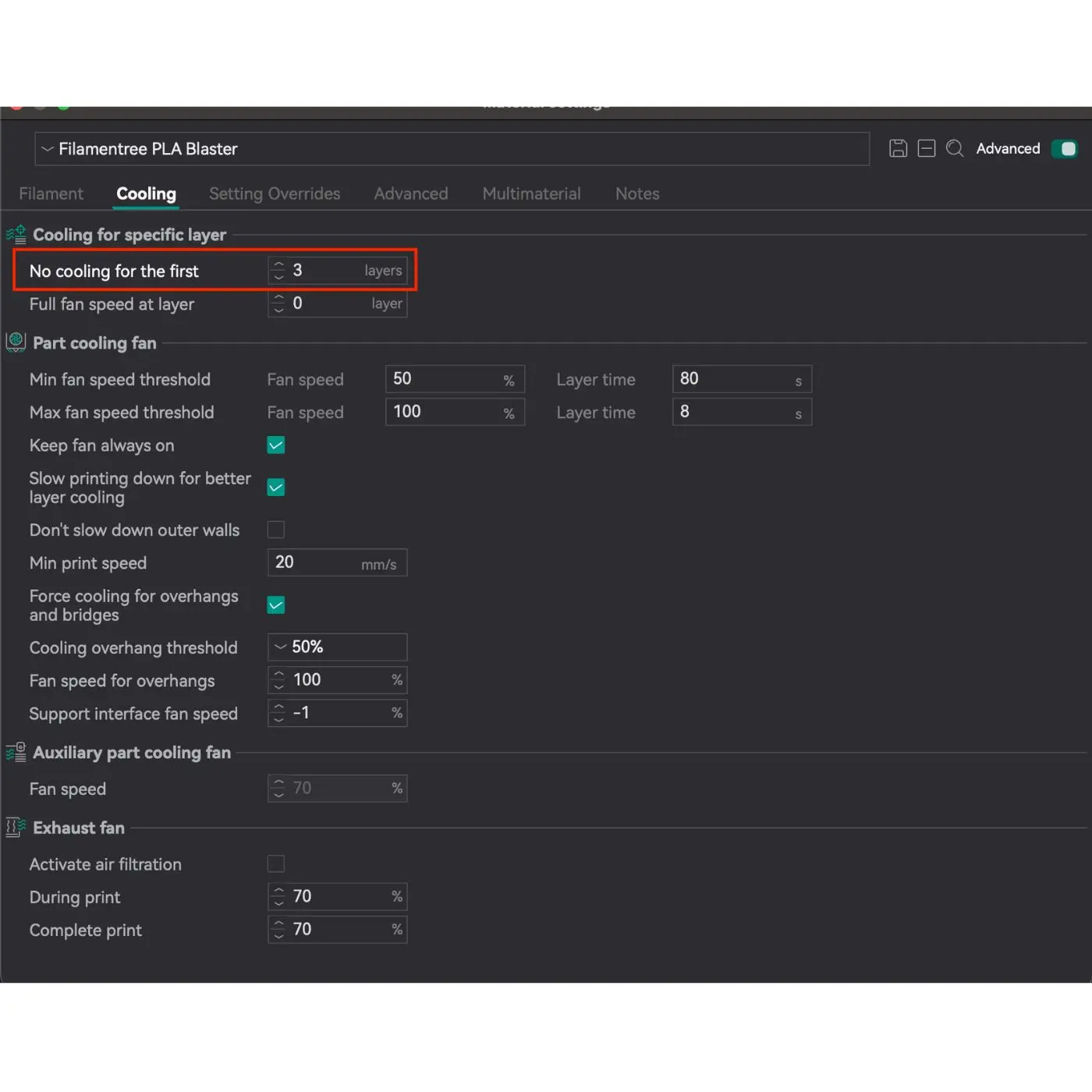
Setting the No cooling for the first parameter is critically important to ensure:
- Strong adhesion to the print bed: Like other high-performance PLA variants, PLA Blaster requires a solid foundation to prevent warping or detachment. Disabling cooling for the first layers allows proper fusion with the build surface.
- Prevention of warping or delamination: Keeping the cooling off for the first 3 layers gives the base layers time to stabilize, reducing the risk of deformation.
- A smooth transition to full cooling mode: This gradual cooling approach helps maintain consistent layer bonding and enhances overall print quality.
This setting is standard for PLA Blaster, as it takes into account its thermal properties and ensures optimal conditions for stable and reliable printing.
Part cooling fan
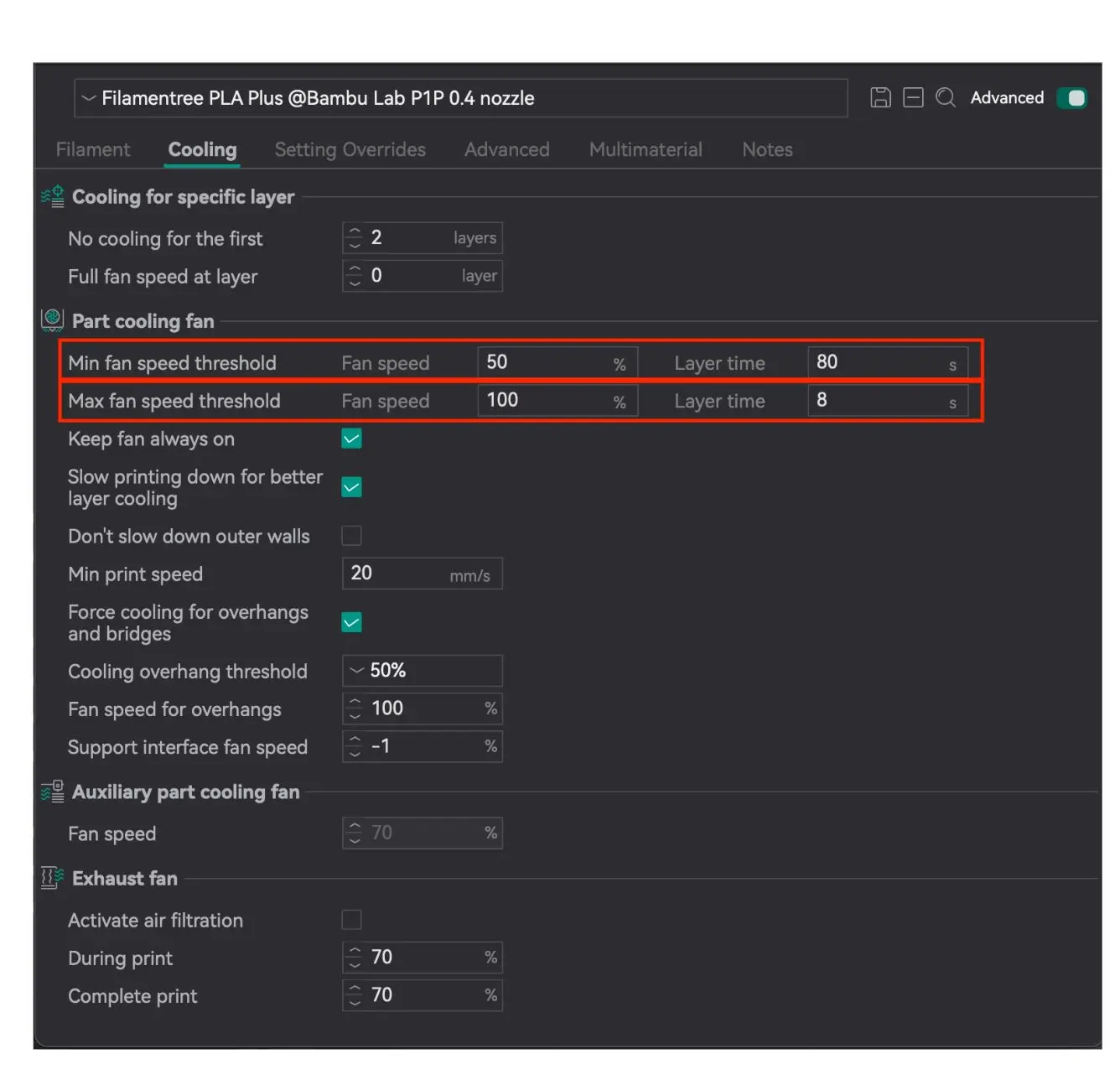
- Minimum layer time: 80 seconds (with fan speed at 50%)
Fan at 50%: This is the optimal speed for gradual cooling without excessive drying of the material.
- Maximum layer time: 8 seconds (with fan speed at 100%)
Advantage: 100% fan speed helps quickly cool large layers and ensures their stability before the next layer is applied.
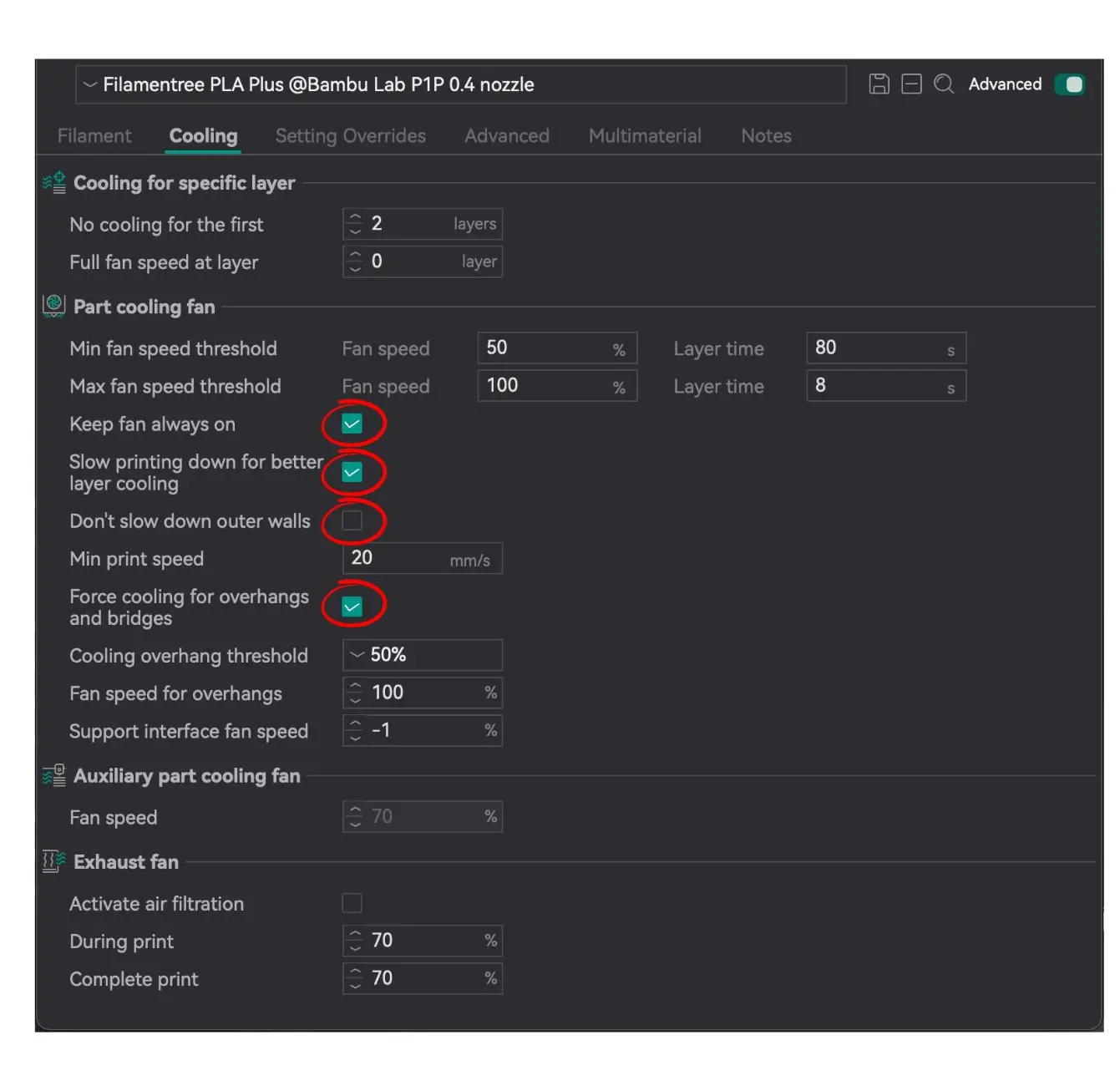
Always on:
✔️ Keep fan always on
✔️ Slow printing down for better layer cooling
✔️ Force cooling for overhangs and bridges
Always off:
✖️ Don’t slow down outer walls
Using the correct printing parameters for PLA Blaster is essential for achieving high-quality results. As an enhanced version of standard PLA, PLA Blaster requires precise settings to fully optimize its advanced properties. By following the recommended settings, you can take full advantage of its increased strength, durability, and excellent print quality, ensuring reliable and visually appealing prints.