





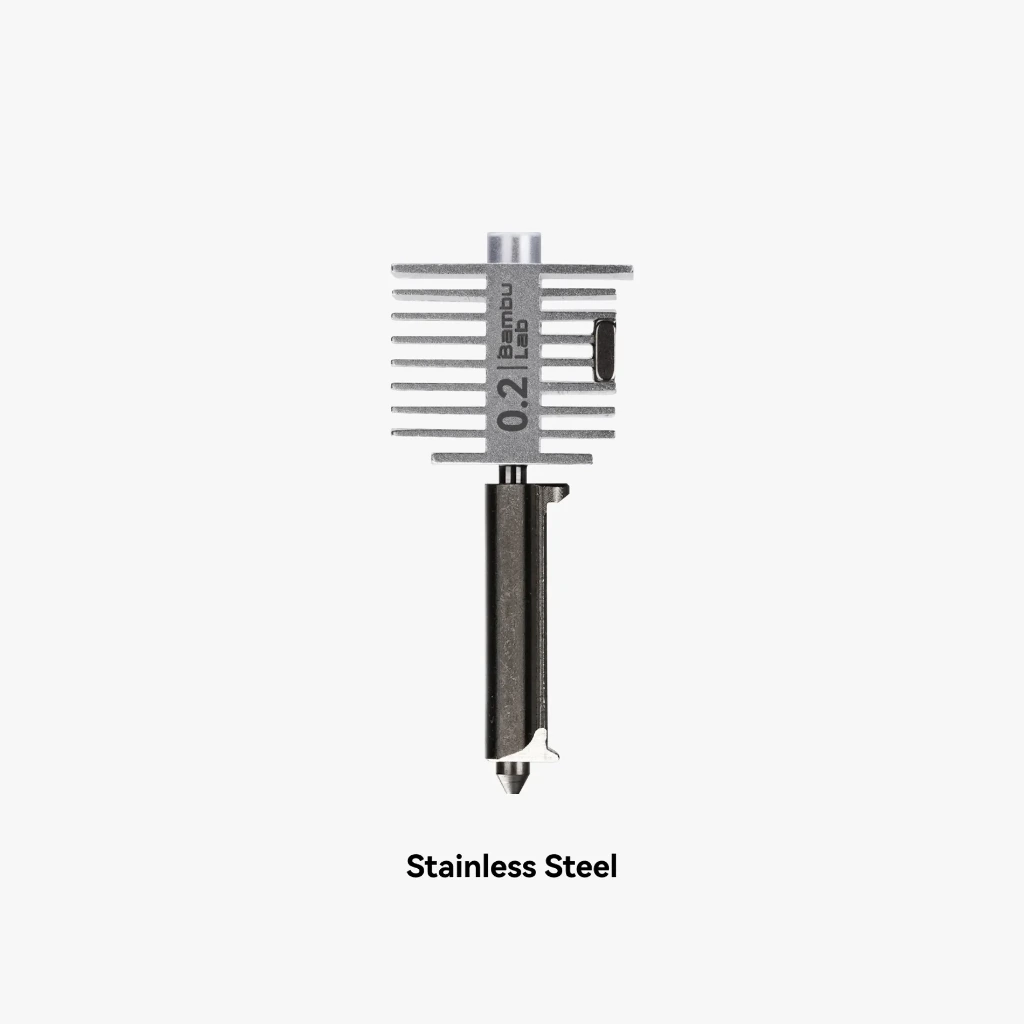
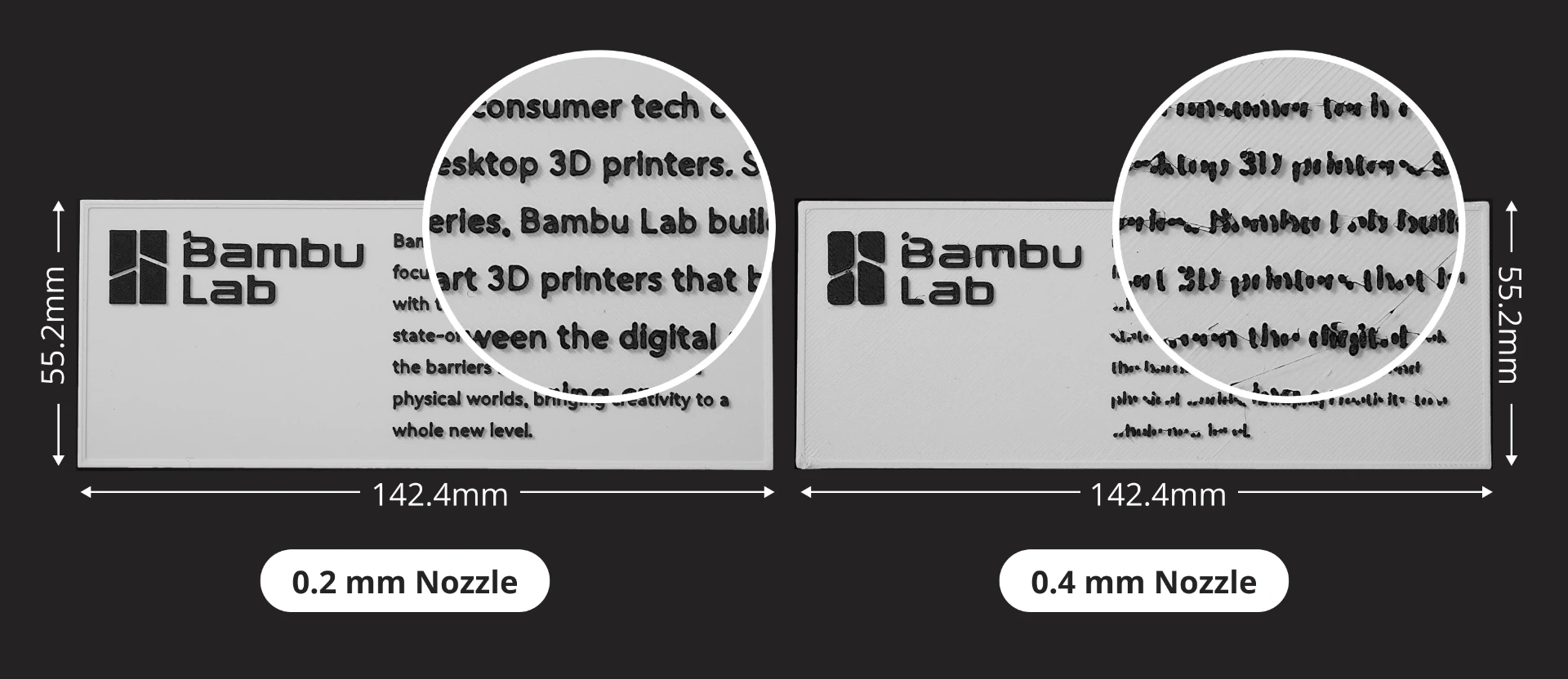
0.2mm Nozzle - Optimal Print Fineness
Smaller diameter extrudes thin filaments
High resolution on the horizontal print surface
0.6mm and 0.8mm Nozzle - Faster Print Speed
Larger diameter extrudes more filaments per second, resulting in faster print speed
Comparison of Different Nozzle Sizes
| 0.2 mm Nozzle | 0.4 mm Nozzle | 0.6 mm Nozzle | 0.8 mm Nozzle | |
| Usage scenario | Perfect for small and intricate models, with precision that’s worth the wait |
Ideal for everyday use with the perfect balance of speed and qualty |
Faster speeds and capable of printing high-performance filaments, with some decrease in resolution |
Faster speeds and capable of printing high-performance filaments, with some decrease in resolution |
| Commonly used for | Miniature models Intricate logos Text Molds |
Toys Mechanical parts Decorative objects |
Large structural parts Functional parts for household Industrial or engineering parts High-strength models |
Large structural parts Functional parts for household Industrial or engineering parts High-strength models |
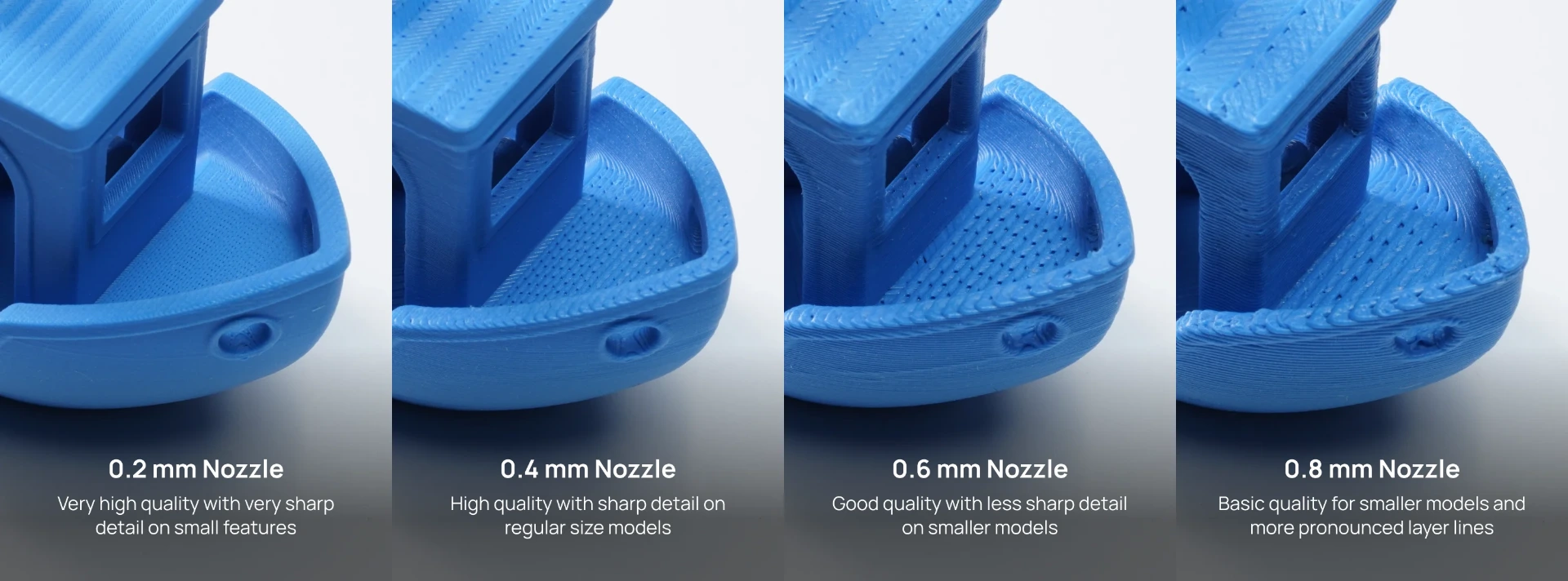
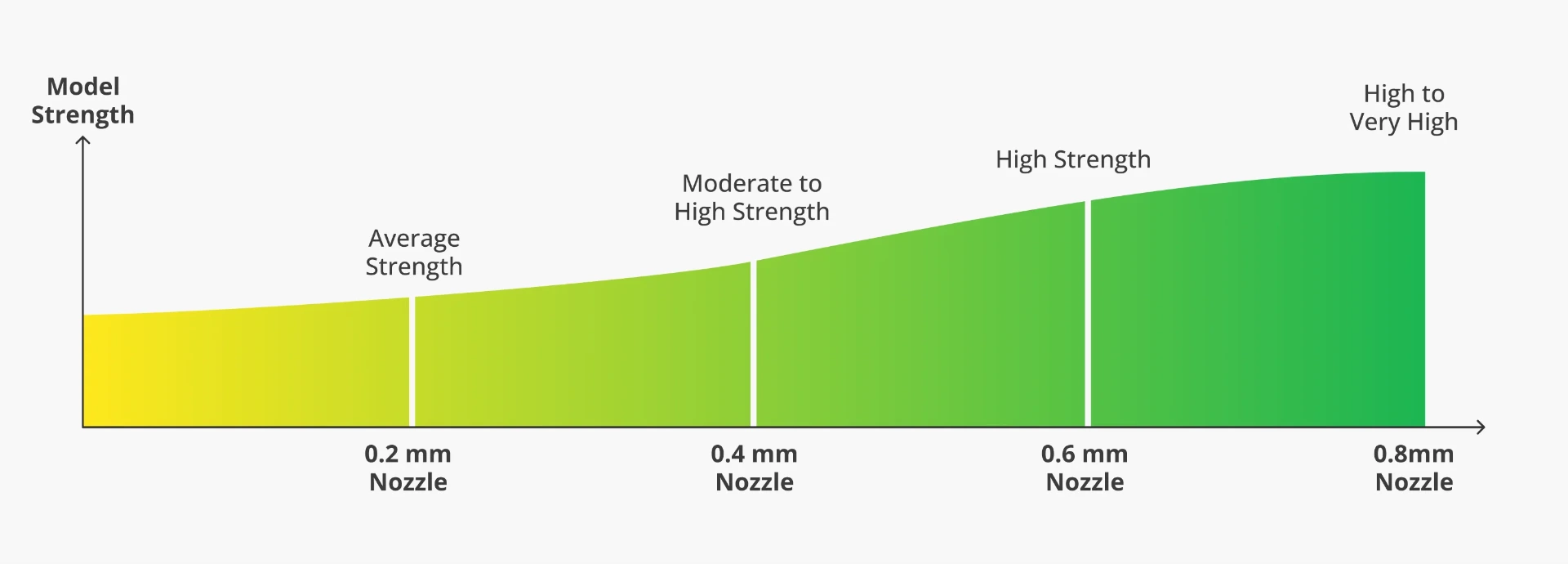
*The final display of 'Model Strength' & 'Model Fineness' depend on the results of the material testing
- Filaments with carbon fiber, glass fiber, metal, or other inorganic particles are prone to clog a 0.2 mm nozzle.
- For filaments containing carbon fiber or glass fiber, it is highly recommended to use a hardened steel 0.6 mm nozzle to minimize the risk of clogging and abrasion.
- PLA-CF and PETG-CF have been extensively tested and proven to have a low risk of clogging when printed with a hardened steel 0.4 mm nozzle, while also achieving higher print quality.
Product Specifications
| Max. Printing Temp. | 320 ℃ | Length | 47.3 mm |
| Packaging Weight | 30 g | Packaging Size | 60*60*30 mm |
| Size | 0.2 mm or 0.4mm or 0.6mm |
| Brand | Bambu Lab |